
Public Service Announcement
Petawawa and Surrounding Region to Host Royal Canadian Air Force Basic Tactical Aviation Course
October 7, 2026 – Kingston, Ont. – National Defence/Canadian Armed Forces
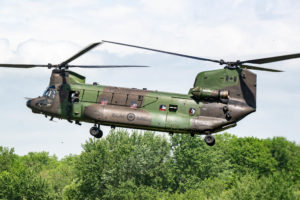
From October 13 to November 10, 2026, the Basic Tactical Aviation Course (BTAC) 2602 will be conducted from Canadian Forces Base Petawawa, Ontario. Training activities will occur throughout Renfrew County, Ontario, and the Pontiac region of Quebec. During this period, residents may observe Royal Canadian Air Force (RCAF) CH-146 Griffon and CH-147F Chinook helicopters operating at low altitudes within authorized training areas.
Several landowners across the region have voluntarily granted access to their properties to support this training. Their cooperation enables more realistic operational environments for course candidates. Low-level flying operations are planned in the following areas: Killaloe, Hagarty and Richards; Madawaska Valley; Laurentian Hills; Pembroke; and Whitewater Region in Ontario; and Mansfield-et-Pontefract, Sheenboro, Lac-Nilgaut and L’Isle-aux-Allumettes in Quebec.
The course will employ armed infantry forces and simulated enemy forces to conduct realistic aviation-borne operations. Residents may notice the use of blank ammunition and pyrotechnics, including flares and smoke. These effects are part of a controlled simulation designed to replicate battlefield conditions and enhance realism for participating personnel.
Simulated enemy forces will be identifiable by orange hunting caps and orange or yellow reflective armbands worn on the left arm. All weapons used during training will be clearly identified, and those firing blank ammunition will be equipped with blank firing adapters. Blank ammunition will only be used within designated training areas and authorized Land User Agreement locations. Local authorities will be advised of all simulation activities. Residents may also observe military vehicles operating throughout the region. There is no cause for concern.
BTAC develops the leadership, decision-making, and tactical expertise required to plan and execute complex helicopter operations. Through rigorous training in realistic operational environments, the course prepares Tactical Aviation Flight Leads to effectively support domestic and expeditionary missions.
Helicopter operations may generate unfamiliar noise and attract public attention. Training activities will be conducted only during daylight hours, which will reduce noise impacts on surrounding communities. All flying operations conducted by the RCAF are carefully planned and closely supervised to ensure public safety. These operations are subject to weather and flying conditions.
-30-
Associated Links
Royal Canadian Air Force
1 Wing Kingston
CH-146 Griffon
CH-147F Chinook
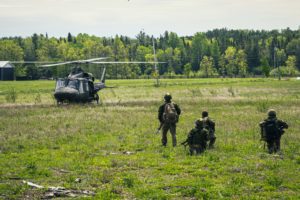 Basic Tactical Aviation Course 2601 candidate flying a CH-146 Griffon lands to extract members of 2 Service Battalion, during a simulated mission, Garrison Petawawa, Ontario May 29, e”]
 On June 11 2026, the Basic Tactical Aviation Course worked alongside with infantrymen of Third Battalion, the Royal Canadian Regiment (Mike Company) to conduct an exercise at an abandoned sawmill in the Pontiac region of Quebec (simulating an enemy position). The purpose of the course so pilots can plan and execute tactical aviation missions overseas.
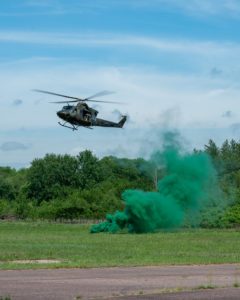 On June 11 2026, the Basic Tactical Aviation Course worked alongside with infantrymen of Third Battalion, the Royal Canadian Regiment (Mike Company) to conduct an exercise at an abandoned sawmill in the Pontiac region of Quebec (simulating an enemy position). The purpose of the course so pilots can plan and execute tactical aviation missions overseas.
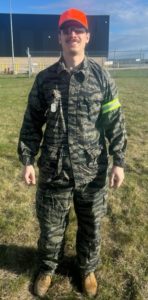 Basic Tactical Aviation Course 2601
Message d’intérêt public
La région de Petawawa accueillera le Cours de base en aviation tactique de l’Aviation
royale canadienne
Le 7 octobre 2026 – Kingston, Ont. – Défense nationale / Forces armées canadiennes
Du 13 octobre au 10 novembre 2026, le Cours de base en aviation tactique 2602 se déroulera à la
Garnison Petawawa, en Ontario. Les activités d’instruction auront lieu dans l’ensemble du comté de
Renfrew, en Ontario, ainsi que dans la région du Pontiac, au Québec. Durant cette période, les
résidents pourraient observer des hélicoptères CH-146 Griffon et CH-147F Chinook de l’Aviation
royale canadienne (ARC), volant à basse altitude dans des zones d’entraînement autorisées.
Plusieurs propriétaires fonciers de la région ont volontairement accordé l’accès à leurs terrains afin
de soutenir cette instruction. Leur collaboration contribue à offrir aux candidats des environnements
d’entraînement plus réalistes. Des opérations de vol à basse altitude sont prévues dans les secteurs
suivants : Killaloe, Hagarty et Richards; Madawaska Valley; Laurentian Hills; Pembroke; et la région
de Whitewater, en Ontario, ainsi qu’à Mansfield-et-Pontefract, à Sheenboro, à Lac-Nilgaut et à L’Isleaux-
Allumettes, au Québec.
Le cours mettra en scène des forces d’infanterie armées et des forces ennemies simulées afin de
mener des opérations héliportées réalistes. Les résidents pourraient remarquer l’utilisation de
munitions à blanc et d’effets pyrotechniques, notamment des fusées éclairantes et de la fumée. Ces
effets font partie d’une simulation contrôlée conçue pour reproduire les conditions du champ de
bataille et accroître le réalisme de l’entraînement des participants.
Les forces ennemies simulées seront identifiables grâce à des casquettes de chasse orange et à
des brassards réfléchissants orange ou jaunes portés au bras gauche. Toutes les armes utilisées
durant l’entraînement seront clairement identifiées, et celles tirant des munitions à blanc seront
munies d’un dispositif de tir à blanc. Les munitions à blanc ne seront utilisées que dans les zones
d’entraînement désignées et aux emplacements autorisés visés par une entente d’utilisation des
terres. Les autorités locales seront avisées de toutes les activités de simulation. Les résidents
pourraient également observer des véhicules militaires circulant dans la région. Il n’y a pas lieu de
s’inquiéter.
Le Cours de base en aviation tactique permet d’acquérir les compétences en leadership et en prise
de décision, ainsi que l’expertise tactique nécessaires à la planification et à l’exécution d’opérations
complexes mettant en oeuvre des hélicoptères. Grâce à un entraînement rigoureux dans des
environnements opérationnels réalistes, le cours prépare les futurs chefs de patrouille de l’Aviation
tactique à soutenir efficacement les opérations au pays et à l’étranger.
Les opérations d’hélicoptères peuvent produire des bruits inhabituels et attirer l’attention du public.
Les activités d’instruction se dérouleront uniquement pendant les heures de clarté, ce qui réduira les
effets du bruit sur les collectivités environnantes. Tous les vols de l’ARC sont soigneusement
planifiés et étroitement supervisés afin d’assurer la sécurité
Recent Comments